
Press Released
Rigorous and evidence-based analysis to inform public policies.
Transforming data into actionable knowledge to build fairer and more effective migration policies.
CEUTA AND MELILLA: PREPARING FOR A CRISIS THAT MUST NOT OVERWHELM US AGAIN
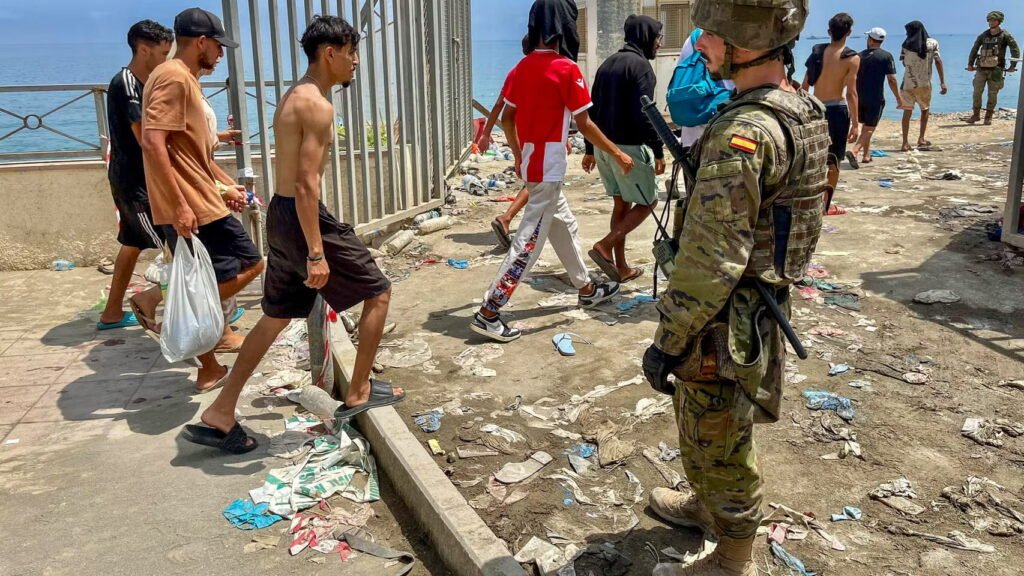
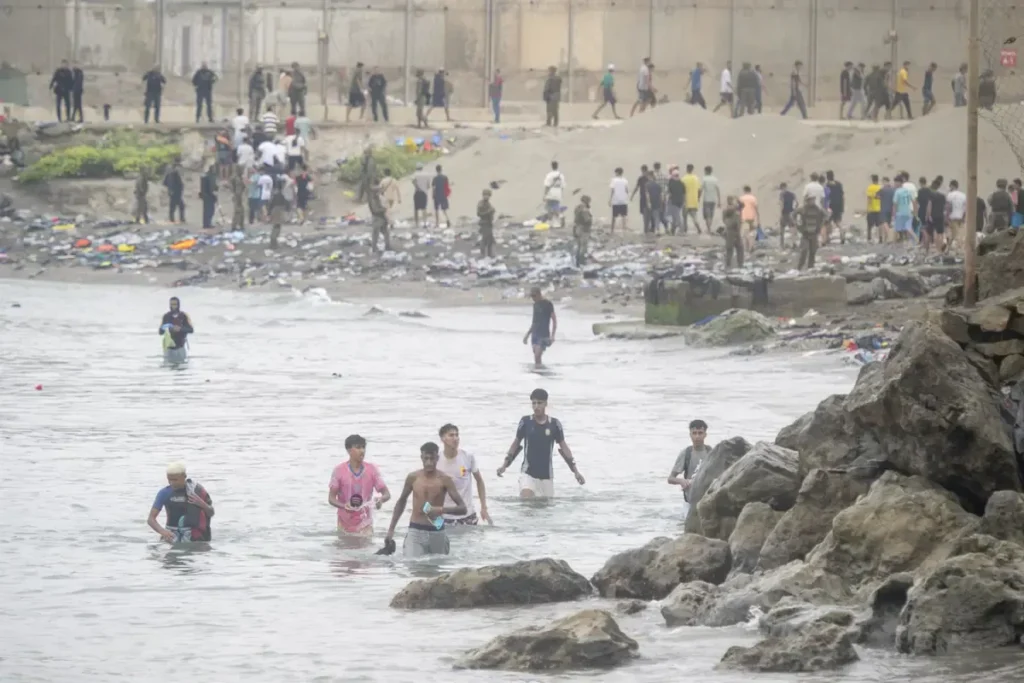
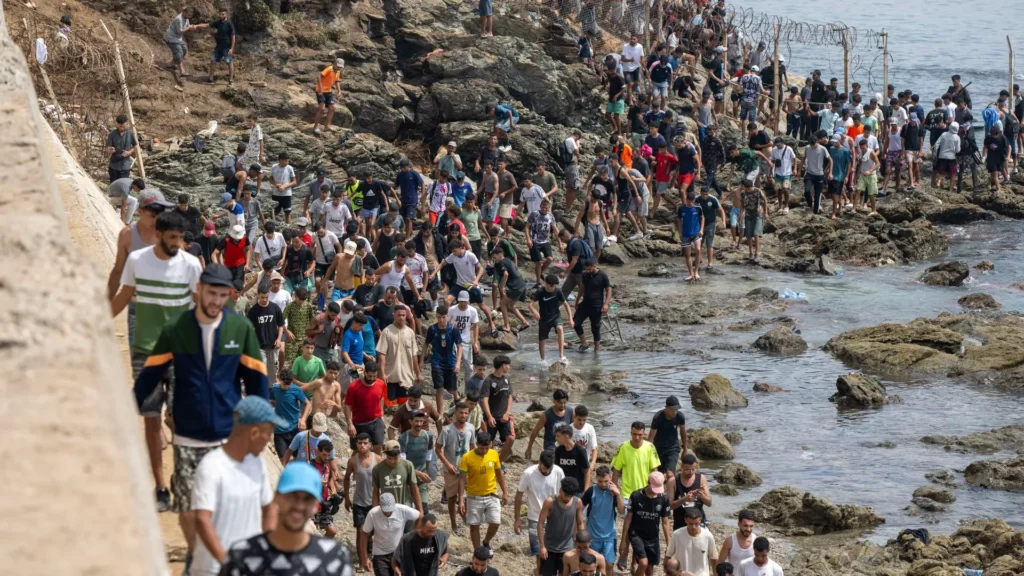
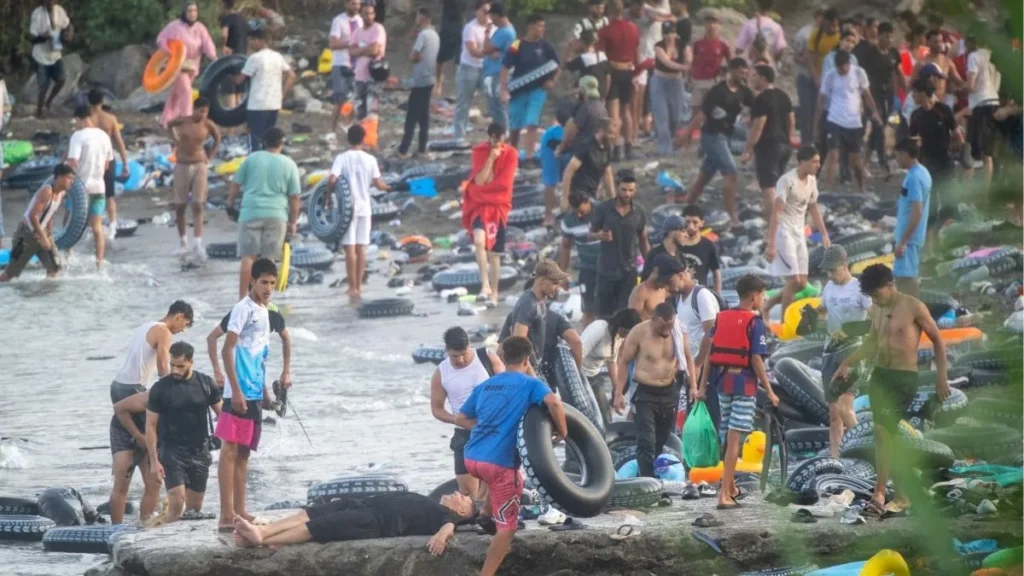
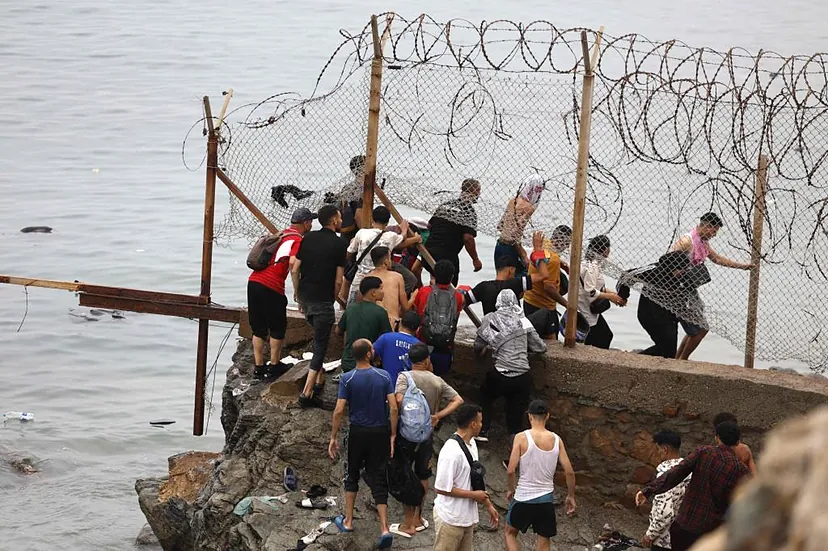
For several days, Ceuta had seen a steady increase in the number of people swimming across from Morocco. The pressure mounted around the Tarajal and Benzú breakwaters, with the majority being Moroccan teenagers and very young men. On 30 July, however, the situation took on alarming proportions: tens of thousands of people crossed the border by sea and land within a few hours, overwhelming the capacity of the authorities and the reception services in a city with a population of just 84,000.
The figures remain provisional and should be treated with caution. The Ministry of the Interior has estimated that around 50,000 people entered the country illegally and has indicated that approximately half subsequently returned to Morocco. Dozens of deaths have also been recorded, mainly due to drowning, along with numerous injuries. The pressure then shifted to Melilla, where local authorities estimated that between 300 and 400 people had entered from Morocco.
What has occurred is a border and humanitarian crisis of enormous gravity. The immediate priority must be to attend to the injured, identify those who have entered and restore normal border operations. But it is also necessary to analyse why a movement of this magnitude was not anticipated and what might have happened if the profile and nationality of those arriving had been different.
A CRISIS PRECEDED BY WARNING SIGNS
The mass arrival did not come entirely out of the blue. During the previous week, around 1,500 people had reached Ceuta by swimming, whilst reception and child protection services were beginning to become overwhelmed. The Ministry of the Interior maintained at the time that networks were exploiting a recent Supreme Court ruling and spreading a false interpretation according to which Spain could no longer return those who reached the city by sea.
The Supreme Court ruling did not recognise a right to enter or remain in Spain. It established that the exceptional regime for turning people back at the border, as provided for Ceuta and Melilla, cannot be automatically applied to a person intercepted at sea. In such cases, the authorities must identify the person, examine their circumstances, allow them to apply for international protection and, where appropriate, apply the standard return procedure. The problem was that a legal issue was reduced on social media to a very simple message: anyone who swam ashore would not be returned. Faced with this interpretation, Spain should have reacted immediately by reinforcing the maritime border, publicly explaining the scope of the ruling in Arabic and Dari, and preparing additional identification and return teams.
The main lesson is the importance of foresight. Once thousands of people gather and begin to move simultaneously, the situation becomes almost impossible to manage without serious risks to migrants, officials and the local population. Decisive action must be taken before the crossing takes place, when online calls to action appear, the first movements begin and gatherings form near the border. Spain must analyse why a movement of this scale was not anticipated and what needs to change to prevent it from happening again.
THE PROFILE OF THOSE ARRIVING
The images show that the majority are Moroccan teenagers and very young men. Many come from Castillejos — Fnideq — and other cities in northern Morocco, although young people have also travelled from further afield. They do not necessarily fit the profile of those who spend months travelling the routes through the Sahel and the desert under the control of trafficking networks. In many cases, these are rapid movements from within Moroccan territory itself. Youth unemployment in Morocco stood at around 29 per cent among 15- to 24-year-olds in the first quarter of 2026. Added to this are precarious living conditions, regional inequalities, early school leaving, a lack of prospects and an idealised view of Europe constantly promoted on social media.
Understanding these factors means recognising that the response cannot be reduced to police control alone. When thousands of young people consider setting out to sea a reasonable option, there is also a social, economic and expectations-related problem on the other side of the border. One of the issues that should be of greatest concern is the high number of people claiming to be minors. Spain needs rigorous, standardised and swift procedures for age assessment. Where there is reasonable doubt, it is the responsibility of the public prosecutor’s office to order the necessary measures, in collaboration with healthcare professionals. The backlog of unresolved cases harms the children themselves, who need care, because it takes up places, consumes resources and delays decisions about their future.
Furthermore, even if a person is indeed a minor, this does not necessarily mean that the only solution is to remain in Spain. Since 2007, there has been a specific agreement between Spain and Morocco to prevent the irregular migration of unaccompanied minors, to protect them and to organise their coordinated return. In many cases, particularly where families have been identified and suitable reception conditions exist in Morocco, an accompanied and supervised return is the most reasonable solution. Protection policy should not create the expectation that every child who reaches Ceuta will necessarily remain in Spain.
Asylum applications must not become an indiscriminate means of preventing all returns. The system must swiftly distinguish between those in need of international protection and those who have migrated primarily for economic reasons or due to a lack of opportunities. The European Pact on Migration and Asylum, which comes into force in June 2026, requires that people intercepted following irregular entry be registered and subjected to identity, security, health and vulnerability checks. They must then be channelled either into the relevant asylum procedure or the return procedure. The aim is to combine legal safeguards with faster decision-making. Spain needs to immediately deploy specialist teams to process cases as quickly as possible. Ceuta and Melilla cannot shoulder this responsibility alone.
MOROCCO: AN INDISPENSABLE PARTNER, BUT CO-OPERATION THAT NEEDS TO BE ASSESSED
Morocco is Spain’s main migration partner in the western Mediterranean. Its cooperation has helped to reduce departures to the Canary Islands, the Iberian Peninsula and the autonomous cities, and Moroccan security forces prevent thousands of attempted entries every year. Experience in recent years shows that, when there is political will and operational coordination, Morocco has considerable capacity to control departures and reduce pressure on Spain’s borders. Precisely for this reason, the scale of what has happened makes it essential to examine with particular care what went wrong on this occasion. The Ministry of the Interior has emphasised the “exemplary cooperation” between the two countries, has thanked the Moroccan authorities for their efforts, and has announced a strengthening of coordination and of measures aimed at the return of those who entered the country irregularly.
This cooperation must be maintained. However, maintaining the relationship does not mean refraining from asking legitimate questions. The scale of the incident shows that the prevention mechanisms did not function effectively enough. It must be clarified how so many people were able to gather in the vicinity of Ceuta, what information the authorities in both countries had at their disposal, when the first movements were detected, and why the reinforcements failed to prevent the breach. It is possible that Morocco made a significant effort and that, even so, its security forces were overwhelmed. It is also possible that online calls to action and the speed of mobilisation made any response difficult. In any case, the seriousness of the events demands a transparent bilateral assessment, not merely general statements about good cooperation. Spain needs Morocco as a partner, but it also needs that cooperation to be loyal, transparent, predictable, verifiable and effective, especially when control of an external border of the European Union is at stake.
ALGERIA AND A SENSITIVE DIPLOMATIC CONTEXT
The crisis has arisen just a few days after Pedro Sánchez’s official visit to Algeria on 20 July. During the trip, Spain and Algeria announced a new phase in their relations and the holding of a High-Level Meeting in the autumn. Both governments also expressed their willingness to strengthen cooperation on migration management, the fight against terrorism, and economic and energy relations. The improvement in relations with Algeria is in line with Spain’s strategic interests. Algeria is a key energy partner and a central player in ensuring stability in the Mediterranean, including the migration route to the Balearic Islands. Spain must be able to maintain strong relations with both Algeria and Morocco without its rapprochement with one being interpreted as a hostile act against the other. Added to this is the proposed bill on granting Spanish nationality to Sahrawis born under Spanish administration. The initiative would benefit those born in Western Sahara before 1977 who can demonstrate their connection to the former Spanish administration. This context must be considered when analysing bilateral relations with Morocco.
There is, moreover, a recent precedent that Spain cannot ignore. Between 17 and 18 May 2021, around 9,000 people entered Ceuta on foot or by swimming. The European Parliament subsequently noted that the Moroccan police had temporarily relaxed controls, opened the border crossings and ceased to prevent entries. It also expressly pointed out that a movement on such a scale could hardly be considered spontaneous.
The very evolution of Moroccan statements confirmed the political dimension of the crisis. The Moroccan Minister for Foreign Affairs initially linked the confrontation to Spain’s reception of Brahim Ghali, leader of the Polisario Front, and subsequently to what Rabat considered to be Spain’s position on Western Sahara. The European Parliament then condemned the use of border controls, migration and, in particular, minors as a means of exerting pressure on Spain.
That episode demonstrated that a bilateral crisis can rapidly spill over to the border and that Spain cannot tackle alone a form of pressure that affects the European area as a whole. It also reiterated that respect for Spain’s sovereignty and territorial integrity is, at the same time, a matter of European sovereignty and territorial integrity.
WHAT THE GOVERNMENT HAS ANNOUNCED
The Government has sent police and military reinforcements to Ceuta, has begun identifying those who have arrived and is working with Morocco to facilitate the return of those who may be readmitted. Pedro Sánchez and the Minister of the Interior have travelled to the city, and the Government has announced new maritime containment measures in the Tarajal area. These are necessary decisions to respond to the emergency. However, it is not enough to reinforce the border once the movement has already begun. The main lesson from Ceuta is that proactive measures are more effective, safer and more humane than managing a crisis after it has already unfolded.
THE SCENARIO THAT SHOULD CONCERN SPAIN
This episode also forces us to consider an even more difficult scenario. The majority of those arriving are Moroccans, which makes it possible to negotiate their readmission with a neighbouring country with which there are agreements and channels of cooperation. What would have happened if tens of thousands of people had come from sub-Saharan countries with which Spain has no operational readmission mechanisms, or whose consular authorities take months to confirm identities and issue travel documents? The situation would have been much more difficult to manage. Returning them directly to their countries of origin requires identifying them, locating their consular authorities and securing their cooperation. An influx of the same magnitude, consisting mainly of nationals from countries with which there is no effective cooperation on return, would have led to prolonged overcrowding in Ceuta, Melilla and the mainland reception system. Many procedures could have been stalled for months or years.
WHAT SPAIN SHOULD DO
- Spain must begin by conducting a detailed investigation into the sequence of events. It is essential to establish when the calls to gather were detected, what information was shared between Spain and Morocco, what decisions were taken, and at what point the response mechanisms became overwhelmed.
- Secondly, a permanent early-warning mechanism for Ceuta and Melilla must be established. Monitoring of social media, movements towards Castillejos and Beni Enzar, gatherings of young people and changes in border deployments must automatically trigger the deployment of reinforcements and political consultations.
- Thirdly, Spain must improve its border management capacity. The border must be legally sound, but also operationally effective.
- Fourthly, cooperation with Morocco must include verifiable objectives, real-time information sharing and automatic protocols for action. The bilateral relationship is essential and must be nurtured, but it must also be assessed on the basis of its results.
- Fifthly, investment on the ground is essential. Migration cooperation cannot consist solely of funding vehicles, cameras, fences and security forces. Spain and the European Union must invest in long-term measures, youth employment, education, regional development and legal mobility in Morocco and other countries of origin and transit. This investment must be targeted specifically at the areas from which young people originate, have concrete objectives and be subject to evaluation. Small, scattered and short-term projects are unlikely to alter the conditions that fuel irregular migration.
- Finally, Spain must seek clear European backing. Ceuta and Melilla are Spanish territory and the EU’s external border. Their protection cannot be regarded as an exclusively national responsibility. The European Pact provides for mechanisms to deal with crisis situations and the exploitation of migration, and states that no Member State should be left to cope alone when under extraordinary pressure. Europe must act in a coordinated manner in the face of threats from its neighbourhood. Isolated national initiatives and disconnected bilateral agreements weaken the common position. Each country going it alone makes it easier for third countries to exploit European divisions. If it were to be demonstrated that a country is deliberately using migratory movements to put pressure on a Member State, the response should be a European one. Using the frustration of thousands of young people as a political tool endangers their lives and turns them into pawns in a power struggle. Respect for Spain’s sovereignty and territorial integrity is also a matter of European sovereignty and territorial integrity.
Media Courage
El Español
The IEAM urges Spain to “improve” its border management capacity
Europa Press
Migration experts urge Spain to “improve” its border management and request “clear European support”
Democrat
Migration experts urge Spain to improve border controls and demand clear European support
Telecinco
Migration experts urge Spain to “improve” its border management and request “clear European support”
The Objective
Migration experts urge Spain to “improve” its border management and request “clear European support”

The Independent
Ceuta and Melilla have never been part of the Moroccan state

Okdiario
Experts urge Spain to strengthen border management
Capital
The IEAM calls on Spain to improve border management and demand clear European support
The World
Live coverage of the migration crisis in Ceuta