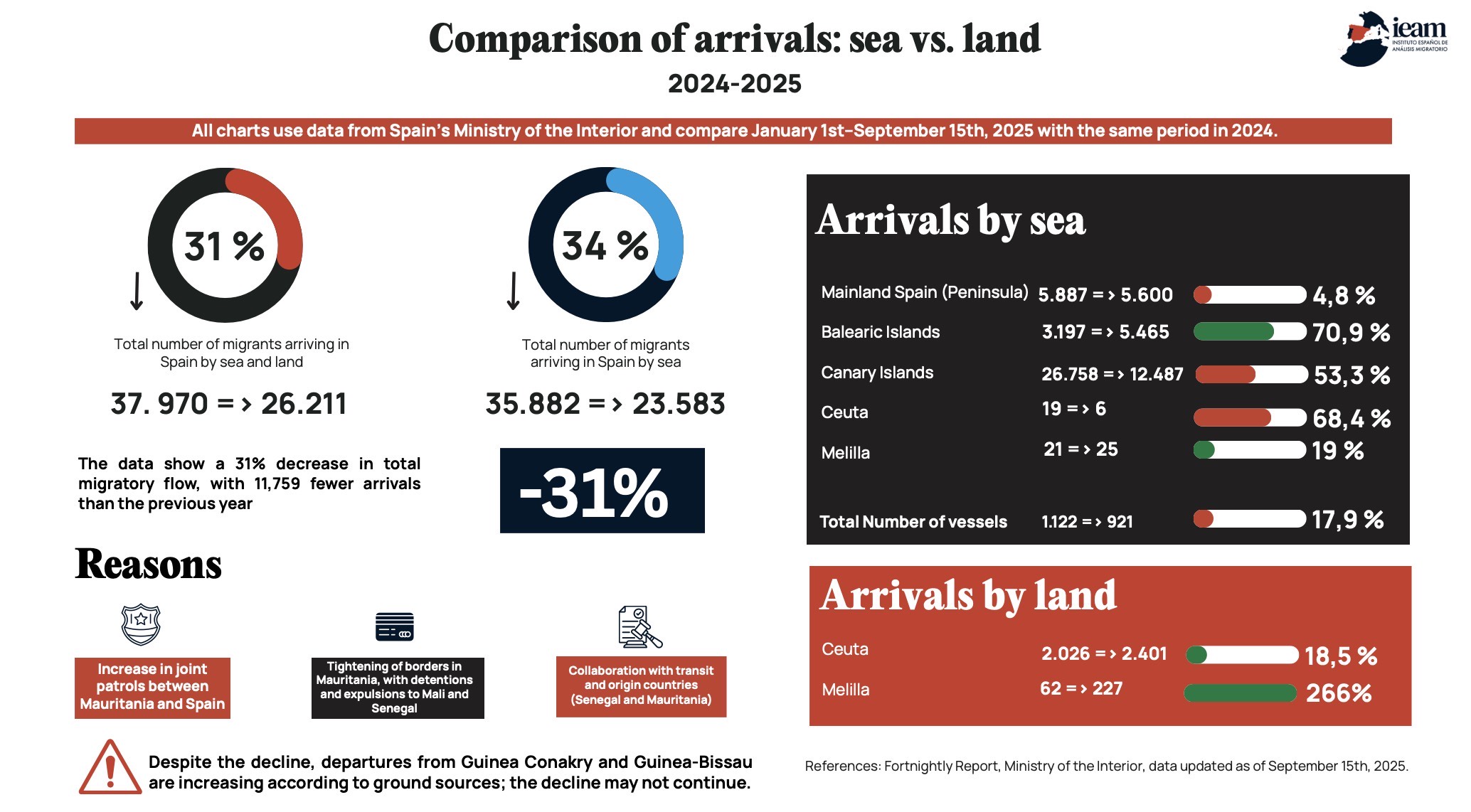
According to the latest data from the Ministry of the Interior, the flow of migrants to Spain fell by 31% between 1 January and 15 September 2025 compared to the same period in 2024: 26,211 people vs. 37,970.
Overall decline, with regional differences
Arrivals by sea fell by 34% (35,882 to 23,583). The Canary Islands accounted for most of the decline: 26,758 to 12,487 (-53.3%). Ceuta fell by 68.4% and Melilla rose by 19%. The Balearic Islands rose by 70.9%, a sign of a partial shift of routes to the central Mediterranean. Intercepted boats: -17.9% (1,122 to 921).
By land, the trend is the opposite: Ceuta +18.5% (2,026 to 2,401) and Melilla +266% (62 to 227), pointing to a resurgence of border attempts, especially in Melilla.
Factors explaining the decline
Even so, departures from Guinea Conakry and Guinea-Bissau are increasing, suggesting that the decline may be temporary.
Conclusion
The provisional balance for 2025 shows a lower flow by sea, but pressure continues and routes are adapting. Constant monitoring is key to anticipating upturns and designing effective and sustainable policies.
“Migration pressure persists and routes are adapting to border control and international cooperation.”