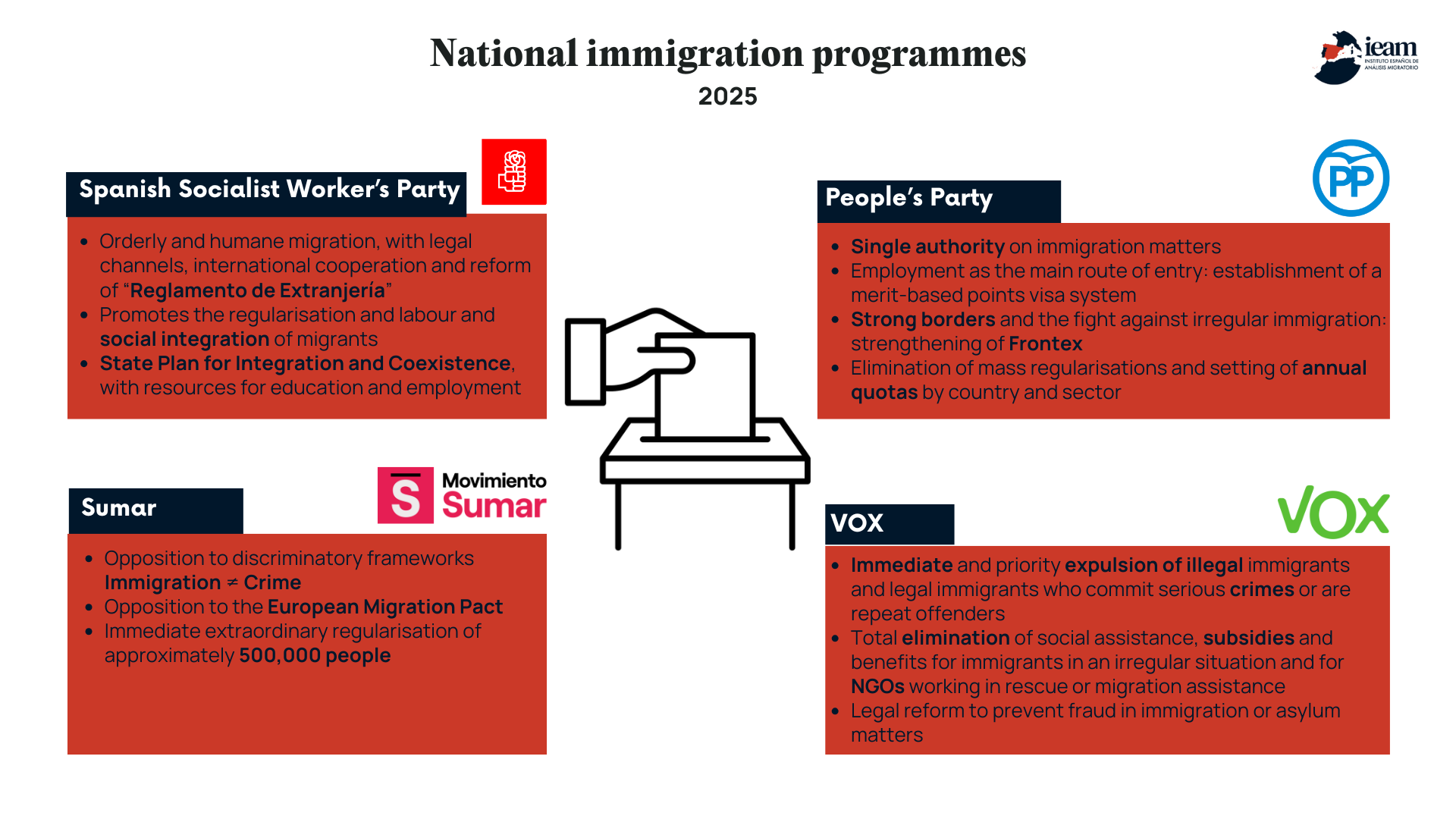
At IEAM – Spanish Institute for Migration Analysis, we present a comparative summary of the immigration proposals included in the national programs (2025) of the main political parties in Spain. The infographic identifies clear differences in model, priorities, and regulatory approach that are likely to shape the migration debate in the coming months.
Four approaches, four migration policy rationales
1) PSOE: order, legal channels, and integration with reforms
The socialist program is structured around orderly, safe, and humanitarian migration, with an emphasis on human rights and international cooperation. It proposes strengthening recruitment at source, advancing the reform of the Immigration Regulations (work permits, residence for training) and deploying a State Plan for Integration and Coexistence with resources for autonomous communities and local councils. It also includes the progressive closure of the CIE, replacing them with reception alternatives.
2) PP: control, institutional coordination, and points-based visas
The Popular Party proposes an approach based on governance and control, with the creation of a single authority to coordinate migration policy. It places employment as the main route of entry, introducing a points-based visa system based on merit and integration, and rejects mass regularizations. It also strengthens border control (resources, technology, and European cooperation) and links social assistance to legal residence and “efforts” at integration.
3) Sumar: broad regularization and guarantees of rights
Sumar proposes an agenda focused on regularization and integration, with immediate extraordinary regularization of around 500,000 people and a comprehensive reform of the legal framework to enable a permanent regularization procedure and simplify procedures. It advocates the closure of the CIE (Immigrant Detention Centers) and is committed to inclusion measures (including the digital dimension and administrative accessibility).
4) VOX: expulsions, restriction of aid, and tightening of the system
VOX adopts an approach of maximum deterrence: immediate expulsion of those who enter irregularly and priority for the expulsion of legal residents who commit serious crimes or are repeat offenders. It rejects regularization, proposes abolishing aid to people in an irregular situation, and eliminating subsidies to NGOs linked (according to its approach) to rescue or migration assistance. It includes specific measures on unaccompanied foreign minors and makes development cooperation conditional on collaboration in returns and border control.
Axis structuring the debate
Taken together, the comparison allows us to identify four axes that separate the proposals:
At IEAM, we will continue to update this comparative analysis to contribute to a more informed and useful public debate for decision-making.
“The political consensus is fractured on the details of the Pact’s implementation.”